


《计算机应用》唯一官方网站 ›› 2026, Vol. 46 ›› Issue (2): 652-658.DOI: 10.11772/j.issn.1001-9081.2025030317
• 前沿与综合应用 • 上一篇
付锦程( ), 杨仕友
收稿日期:2025-03-27
修回日期:2025-05-09
接受日期:2025-05-12
发布日期:2025-05-19
出版日期:2026-02-10
通讯作者:
付锦程
作者简介:付锦程(2002—),男,河南开封人,硕士研究生,主要研究方向:风电功率预测、智能优化算法Email:jincheng.fu@zju.edu.cnReceived:2025-03-27
Revised:2025-05-09
Accepted:2025-05-12
Online:2025-05-19
Published:2026-02-10
Contact:
Jincheng FU
About author:FU Jincheng, born in 2002, M. S. candidate. His research interests include wind power prediction, intelligent optimization algorithms. Email:jincheng.fu@zju.edu.cn摘要:
为了提高短期风电功率预测的准确性,提出一种基于贝叶斯优化和特征融合的xLSTM(extended Long Short-Term Memory)-Transformer模型。该模型综合应用长短期记忆(LSTM)网络的时序处理能力和Transformer的自注意力机制的动态特征融合能力。借助贝叶斯优化方法,模型可在较少的迭代次数条件下优化超参数,显著降低模型对计算资源的依赖。实验结果表明,内蒙古某风电场数据集上,与单一的LSTM模型、Transformer模型、门控循环单元(GRU)模型以及未采用贝叶斯优化和特征融合的xLSTM-Transformer模型相比,当步长(LookBack)为4和8时,所提模型的决定系数R2较基准模型平均提升1.2%~11.3%;平均绝对误差(MAE)平均降低12.8%~38.4%;均方根误差(RMSE)平均降低8.6%~35.8%。结果表明,所提模型在短历史输入条件下具有更高的预测精度与稳定性。
中图分类号:
付锦程, 杨仕友. 基于贝叶斯优化和特征融合混合模型的短期风电功率预测[J]. 计算机应用, 2026, 46(2): 652-658.
Jincheng FU, Shiyou YANG. Short-term wind power prediction using hybrid model based on Bayesian optimization and feature fusion[J]. Journal of Computer Applications, 2026, 46(2): 652-658.
| 指标 | t值 | p值 | 显著性 |
|---|---|---|---|
| R² | -4.34 | 0.002 | 显著 |
| MAE | 0.16 | 0.879 | 不显著 |
| RMSE | 0.14 | 0.894 | 不显著 |
表1 特征融合对模型性能影响的统计显著性检验
Tab. 1 Statistical significance test of impact of feature fusion on model performance
| 指标 | t值 | p值 | 显著性 |
|---|---|---|---|
| R² | -4.34 | 0.002 | 显著 |
| MAE | 0.16 | 0.879 | 不显著 |
| RMSE | 0.14 | 0.894 | 不显著 |
| 指标 | t值 | p值 | 显著性 |
|---|---|---|---|
| R² | 0.45 | 0.663 | 不显著 |
| MAE | 4.24 | 0.002 | 显著 |
| RMSE | 2.84 | 0.019 | 显著 |
表2 贝叶斯优化对模型性能影响的统计显著性检验
Tab. 2 Statistical significance test of impact of Bayesian optimization on model performance
| 指标 | t值 | p值 | 显著性 |
|---|---|---|---|
| R² | 0.45 | 0.663 | 不显著 |
| MAE | 4.24 | 0.002 | 显著 |
| RMSE | 2.84 | 0.019 | 显著 |
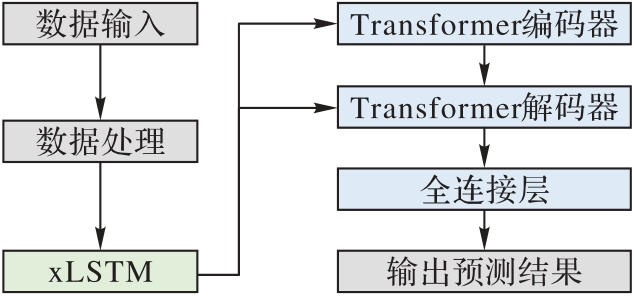
图1 本文混合模型的结构
Fig. 1 Structure of proposed hybrid model
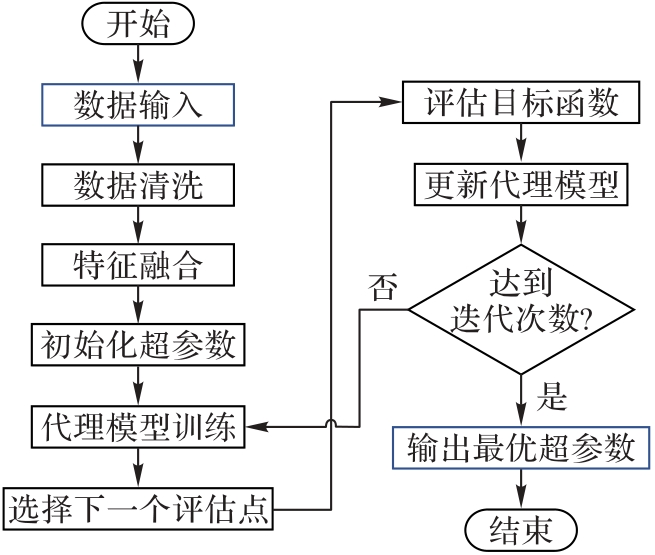
图2 xLSTM-Transformer的训练流程
Fig. 2 Training flow of xLSTM-Transformer
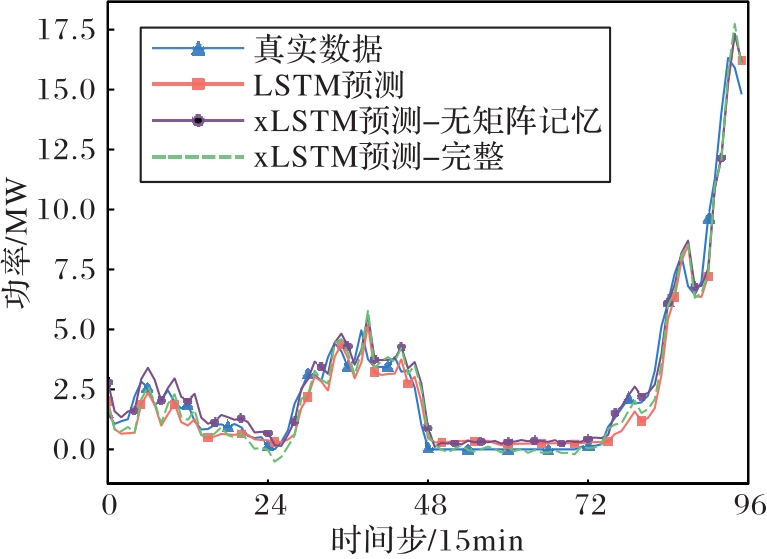
图3 消融实验结果的对比
Fig. 3 Comparison of ablation experimental results
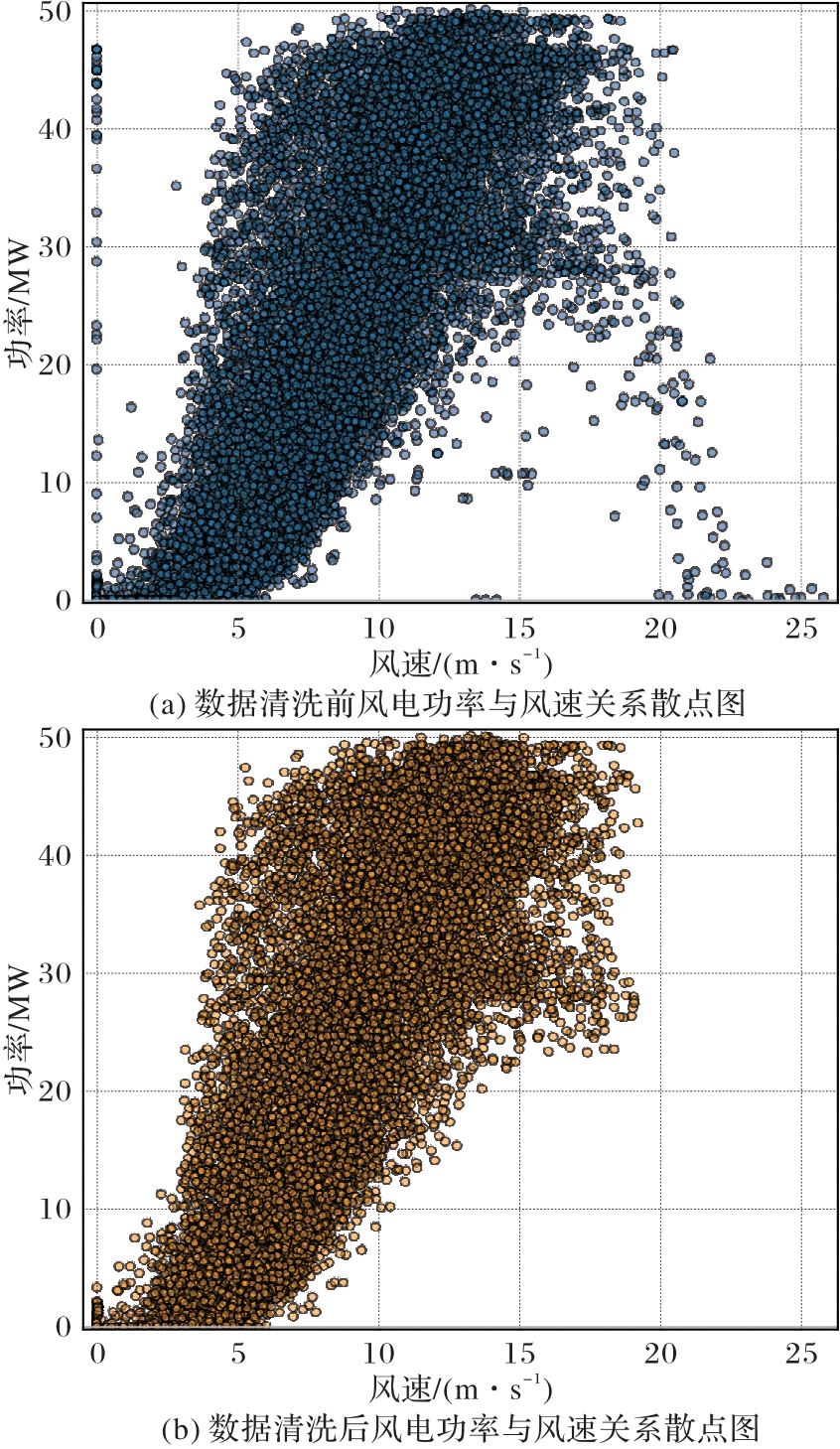
图4 数据清洗前后的结果对比
Fig. 4 Comparison of results before and after data cleaning
| 模型名称 | LookBack=4(1 h) | LookBack=8(2 h) | LookBack=16(4 h) | ||||||
|---|---|---|---|---|---|---|---|---|---|
| R² | MAE | RMSE | R² | MAE | RMSE | R² | MAE | RMSE | |
| 模型1 | 0.907 3 | 0.388 6 | 0.578 6 | 0.930 7 | 0.317 2 | 0.497 5 | 0.936 6 | 0.736 7 | 0.951 8 |
| 模型2 | 0.907 0 | 0.417 3 | 0.650 3 | 0.879 1 | 0.509 4 | 0.662 2 | 0.866 0 | 0.514 0 | 0.736 1 |
| 模型3 | 0.842 7 | 0.503 0 | 0.845 8 | 0.809 9 | 0.689 7 | 0.830 6 | 0.751 1 | 0.673 7 | 0.948 2 |
| 模型4 | 0.897 1 | 0.447 6 | 0.697 8 | 0.905 5 | 0.409 6 | 0.634 0 | 0.887 8 | 0.503 1 | 0.831 3 |
| 模型5 | 0.894 0 | 0.465 3 | 0.652 3 | 0.921 8 | 0.349 2 | 0.528 3 | 0.891 5 | 0.457 0 | 0.626 1 |
表3 5种模型在不同历史数据输入步长下的预测性能对比
Tab. 3 Comparison of prediction performance of five models under different historical data input step sizes
| 模型名称 | LookBack=4(1 h) | LookBack=8(2 h) | LookBack=16(4 h) | ||||||
|---|---|---|---|---|---|---|---|---|---|
| R² | MAE | RMSE | R² | MAE | RMSE | R² | MAE | RMSE | |
| 模型1 | 0.907 3 | 0.388 6 | 0.578 6 | 0.930 7 | 0.317 2 | 0.497 5 | 0.936 6 | 0.736 7 | 0.951 8 |
| 模型2 | 0.907 0 | 0.417 3 | 0.650 3 | 0.879 1 | 0.509 4 | 0.662 2 | 0.866 0 | 0.514 0 | 0.736 1 |
| 模型3 | 0.842 7 | 0.503 0 | 0.845 8 | 0.809 9 | 0.689 7 | 0.830 6 | 0.751 1 | 0.673 7 | 0.948 2 |
| 模型4 | 0.897 1 | 0.447 6 | 0.697 8 | 0.905 5 | 0.409 6 | 0.634 0 | 0.887 8 | 0.503 1 | 0.831 3 |
| 模型5 | 0.894 0 | 0.465 3 | 0.652 3 | 0.921 8 | 0.349 2 | 0.528 3 | 0.891 5 | 0.457 0 | 0.626 1 |
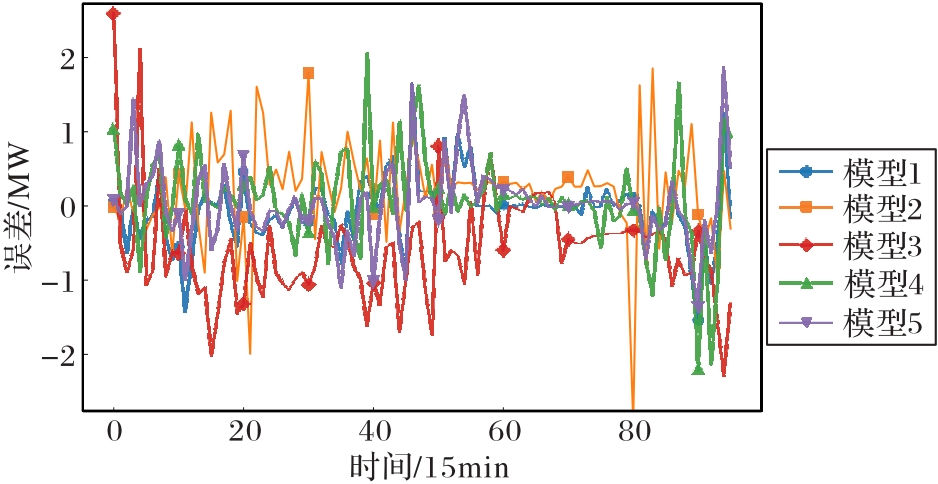
图5 5种模型的预测误差对比
Fig. 5 Comparison of prediction errors of five models
| [1] | 钱政,裴岩,曹利宵,等. 风电功率预测方法综述[J]. 高电压技术, 2016, 42(4): 1047-1060. |
| QIAN Z, PEI Y, CAO L X, et al. Review of wind power forecasting method[J]. High Voltage Engineering, 2016, 42(4): 1047-1060. | |
| [2] | 张智刚,康重庆. 碳中和目标下构建新型电力系统的挑战与展望[J]. 中国电机工程学报, 2022, 42(8): 2806-2818. |
| ZHANG Z G, KANG C Q. Challenges and prospects for constructing the new-type power system towards a carbon neutrality future[J]. Proceedings of the CSEE, 2022, 42(8): 2806-2818. | |
| [3] | AYENE S M, YIBRE A M. Wind power prediction based on deep learning models: the case of Adama wind farm[J]. Heliyon, 2024, 10(21): No.e39579. |
| [4] | 刘谭,刘娜,刘贵平,等. 深度学习方法在风电功率预测中的应用与研究方向概述[J]. 计算机科学与探索, 2025, 19(3): 602-622. |
| LIU T, LIU N, LIU G P, et al. Overview of applications and research directions of deep learning methods for wind power prediction[J]. Journal of Frontiers of Computer Science and Technology, 2025, 19(3): 602-622. | |
| [5] | 武雅君. “双碳”目标下我国清洁能源发电现状及发展趋势[J]. 电气技术与经济, 2023(1): 121-124. |
| WU Y J. The current situation and development trend of clean energy power generation in China under the “dual carbon” goal[J]. Electrical Equipment and Economy, 2023(1): 121-124. | |
| [6] | 张群,唐振浩,王恭,等. 基于长短时记忆网络的超短期风功率预测模型[J]. 太阳能学报, 2021, 42(10): 275-281. |
| ZHANG Q, TANG Z H, WANG G, et al. Ultra-short-term wind power prediction model based on long and short term memory network[J]. Acta Energiae Solaris Sinica, 2021, 42(10): 275-281. | |
| [7] | 韩宇超,同向前,邓亚平. 基于概率密度估计与时序Transformer网络的风功率日前区间预测[J]. 中国电机工程学报, 2024, 44(23): 9285-9295. |
| HAN Y C, TONG X Q, DENG Y P. Probabilistic distribution estimation and temporal Transformer-based interval prediction in day-ahead wind power prediction[J]. Proceedings of the CSEE, 2024, 44(23): 9285-9295. | |
| [8] | 李士哲,王霄慧,刘帅. 考虑多变量相关性改进的风电场Transformer中长期预测模型[J]. 智慧电力, 2024, 52(4): 62-68. |
| LI S Z, WANG X H, LIU S. Improved Transformer medium and long term prediction model of wind farm considering multivariate correlation[J]. Smart Power, 2024, 52(4): 62-68. | |
| [9] | 张亚丽,王聪,张宏立,等. 基于非平稳Transformer的超短期风电功率多步预测[J]. 智慧电力, 2024, 52(1): 108-115. |
| ZHANG Y L, WANG C, ZHANG H L, et al. Multi-step prediction of ultra-short-term wind power based on non-stationary Transformer[J]. Smart Power, 2024, 52(1): 108-115. | |
| [10] | 张子华,李琰,徐天奇,等. 基于麻雀算法优化的VMD-CNN-LSTM的短期风电功率研究[J]. 电气传动, 2023, 53(5): 77-83. |
| ZHANG Z H, LI Y, XU T Q, et al. Research on short-term wind power forecasting based on VMD-CNN-LSTM optimized by sparrow algorithm[J]. Electric Drive, 2023, 53(5): 77-83. | |
| [11] | 欧旭鹏,任涛,王玉鹏,等. 基于改进麻雀搜索算法优化深度学习网络超参数的短期风电功率预测[J]. 智慧电力, 2023, 51(3): 31-38. |
| OU X P, REN T, WANG Y P, et al. Short-term wind power prediction by optimizing deep learning network hyper-parameters based on ISSA[J]. Smart Power, 2023, 51(3): 31-38. | |
| [12] | 宋立业,鞠亚东,张鑫. 基于改进MFO优化Attention-LSTM的超短期风电功率预测[J]. 电气工程学报, 2023, 18(3): 358-368. |
| SONG L Y, JU Y D, ZHANG X. Ultra-short-term wind power prediction based on improved MFO optimized Attention-LSTM[J]. Journal of Electrical Engineering, 2023, 18(3): 358-368. | |
| [13] | 付果. 基于贝叶斯方法的风电功率概率性预测分析及研究[D]. 北京:华北电力大学(北京), 2019. |
| FU G. Probabilistic prediction analysis and research of wind power based on Bayesian method[D]. Beijing: North China Electric Power University, 2019. | |
| [14] | 刘新宇,蒲欣雨,李继方,等. 基于贝叶斯优化的VMD-GRU短期风电功率预测[J]. 电力系统保护与控制, 2023, 51(21): 158-165. |
| LIU X Y, PU X Y, LI J F, et al. Short-term wind power prediction of a VMD-GRU based on Bayesian optimization[J]. Power System Protection and Control, 2023, 51(21): 158-165. | |
| [15] | 綦方中,卓可翔,张婧雅,等. 基于多特征融合和变分模态分解优化算法的短期风电功率预测体系与方法[J]. 系统工程理论与实践, 2025, 45(3): 1047-1064. |
| QI F Z, ZHUO K X, ZHANG J Y, et al. A short-term wind power prediction system and method based on multi-feature fusion and variational mode decomposition optimization algorithm[J]. System Engineering — Theory and Practice, 2025, 45(3): 1047-1064. | |
| [16] | BECK M, PÖPPEL K, SPANRING M, et al. xLSTM: Extended long short-term memory[C]// Proceedings of the 38th International Conference on Neural Information Processing Systems. Red Hook: Curran Associates Inc., 2024: 107547-107603. |
| [17] | 苏向敬,宇海波,符杨,等. 基于DALSTM和联合分位数损失的海上风电功率概率预测[J]. 中国电力, 2023, 56(11): 10-19. |
| SU X J, YU H B, FU Y, et al. Probabilistic forecasting of offshore wind power based on Dual-stage Attentional LSTM and joint quantile loss function[J]. Electric Power, 2023, 56(11): 10-19. | |
| [18] | CAI F, JIANG Y, SONG W, et al. Short-term wind turbine blade icing wind power prediction based on PCA-FLSM[J]. Energies, 2024, 17(6): No.1335. |
| [19] | 赵哲,张学镭,苗浩泽,等. 基于数据清洗与个性化联邦学习的风电功率预测研究[J]. 电力科学与工程, 2025, 41(1): 60-66. |
| ZHAO Z, ZHANG X L, MIAO H Z, et al. A study of wind power prediction based on data cleaning and personalized federated learning[J]. Electric Power Science and Engineering, 2025, 41(1): 60-66. | |
| [20] | WANG G, HUANG X, LI Y, et al. Conv-ELSTM: an ensemble deep learning approach for predicting short-term wind power[J]. IET Renewable Power Generation, 2024, 18(16): 4084-4096. |
| [21] | 虞伟,黄浩,金晨星,等. 基于多头自注意力特征变换和CNN-LSTM的超短期风电功率预测[J/OL]. 南方电网技术 [2025-02-10].. |
| YU W, HUANG H, JIN C X, et al. Ultra-short-term wind power forecasting based on multi-head self-attention feature transform and CNN-LSTM[J/OL]. Southern Power System Technology [2025-02-10].. | |
| [22] | 梁智,孙国强,卫志农,等. 基于变量选择与高斯过程回归的短期负荷预测[J]. 电力建设, 2017, 38(2): 122-128. |
| LIANG Z, SUN G Q, WEI Z N, et al. Short-term load forecasting based on variable selection and Gaussian process regression[J]. Electric Power Construction, 2017, 38(2): 122-128. | |
| [23] | 杨超,冉启武,罗德虎,等. 基于注意力机制的CNN-BIGRU短期电价预测[J]. 电力系统及其自动化学报, 2024, 36(3): 22-29. |
| YANG C, RAN Q W, LUO D H, et al. CNN-BIGRU short-term electricity price prediction based on attention mechanism[J]. Proceedings of the CSU-EPSA, 2024, 36(3): 22-29. | |
| [24] | 吉兴全,曾若梅,张玉敏,等. 基于注意力机制的CNN-LSTM短期电价预测[J]. 电力系统保护与控制, 2022, 50(17): 125-132. |
| JI X Q, ZENG R M, ZHANG Y M, et al. CNN-LSTM short-term electricity price prediction based on an attention mechanism[J]. Power System Protection and Control, 2022, 50(17): 125-132. | |
| [25] | MEI J, WANG C, LUO S, et al. Short-term wind power prediction based on encoder-decoder network and multi-point focused linear attention mechanism[J]. Sensors, 2024, 24(17): No.5501. |
| [1] | 姜皓骞, 张东, 李冠宇, 陈恒. 基于结构增强的层次化任务导向提示策略的对话推荐系统SetaCRS[J]. 《计算机应用》唯一官方网站, 2026, 46(2): 368-377. |
| [2] | 陈晓雷, 郑芷薇, 黄雪, 曲振彬. 结合球面对齐与自适应几何校正的全景视频超分辨率网络[J]. 《计算机应用》唯一官方网站, 2026, 46(2): 528-535. |
| [3] | 刘权捷, 顾兆一, 王春源. 复杂光照条件下的不安全驾驶行为检测[J]. 《计算机应用》唯一官方网站, 2026, 46(2): 613-619. |
| [4] | 林金娇, 张灿舜, 陈淑娅, 王天鑫, 连剑, 徐庸辉. 基于改进图注意力网络的车险欺诈检测方法[J]. 《计算机应用》唯一官方网站, 2026, 46(2): 437-444. |
| [5] | 李名, 王孟齐, 张爱丽, 任花, 窦育强. 基于条件生成对抗网络和混合注意力机制的图像隐写方法[J]. 《计算机应用》唯一官方网站, 2026, 46(2): 475-484. |
| [6] | 曹杰, 谢凌锋, 王丙金, 张昌河, 余紫东, 邓超. 考虑类不平衡和背景多样性问题的青少年脊柱侧弯筛查方法[J]. 《计算机应用》唯一官方网站, 2026, 46(2): 630-639. |
| [7] | 郭泽一, 李凤莲, 徐利春. 基于双重决策机制的深度符号回归算法[J]. 《计算机应用》唯一官方网站, 2026, 46(2): 406-415. |
| [8] | 韩锋, 卜永丰, 梁浩翔, 黄舒雯, 张朝阳, 孙士杰. 基于多层次时空交互依赖的车辆轨迹异常检测[J]. 《计算机应用》唯一官方网站, 2026, 46(2): 604-612. |
| [9] | 崔克俭, 王志明, 邱兆文. 基于光学相干断层扫描血管成像的视网膜血管分割与冠心病预测方法[J]. 《计算机应用》唯一官方网站, 2026, 46(2): 640-651. |
| [10] | 边小勇, 袁培洋, 胡其仁. 双编码空频混合的红外小目标检测方法[J]. 《计算机应用》唯一官方网站, 2026, 46(1): 252-259. |
| [11] | 梁瑾裕, 高宏娟, 杜晓飞. 基于潜在特征增强进行解耦的三维人脸生成方法[J]. 《计算机应用》唯一官方网站, 2026, 46(1): 216-223. |
| [12] | 昝志辉, 王雅静, 李珂, 杨智翔, 杨光宇. 基于SAA-CNN-BiLSTM网络的多特征融合语音情感识别方法[J]. 《计算机应用》唯一官方网站, 2026, 46(1): 69-76. |
| [13] | 曹柠, 温昕, 郝雁嵘, 曹锐. 多域特征融合的轻量化运动想象脑电信号解码神经网络[J]. 《计算机应用》唯一官方网站, 2026, 46(1): 289-296. |
| [14] | 景攀峰, 梁宇栋, 李超伟, 郭俊茹, 郭晋育. 基于师生学习的半监督图像去雾算法[J]. 《计算机应用》唯一官方网站, 2025, 45(9): 2975-2983. |
| [15] | 李维刚, 邵佳乐, 田志强. 基于双注意力机制和多尺度融合的点云分类与分割网络[J]. 《计算机应用》唯一官方网站, 2025, 45(9): 3003-3010. |
| 阅读次数 | ||||||
|
全文 |
|
|||||
|
摘要 |
|
|||||
